
What to Expect on Your First African Safari: The Ultimate First-Timer’s Guide
What Is a First African Safari Really Like?
A first African safari is unlike any other travel experience. Your first safari will likely exceed your expectations in ways you did not anticipate — and differ from them in others. The wildlife is real, wild, and unpredictable; the spaces are incomprehensibly vast; the silence of the bush at dawn is unlike anything you have experienced; and the sky at night, away from light pollution, will stop you in your tracks. What surprises first-time safari guests most is not the wildlife itself, but the totality of the experience — the smells of the bush, the warmth of a fire at night, the intimacy of a small lodge, and the calibre of knowledge carried by an exceptional field guide. For many travellers, a first African safari becomes the benchmark against which every future holiday is measured.
What Does a Typical Safari Day Look Like?
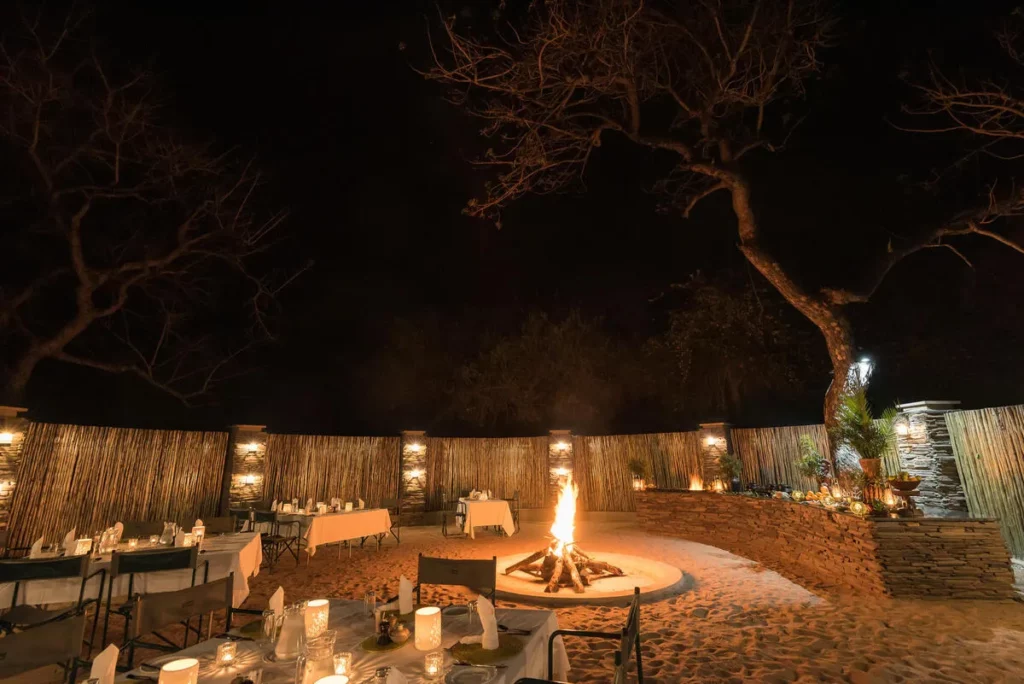
A standard private reserve safari day: wake-up call at 5:30am with hot coffee and rusks left outside your room door; morning game drive departing 6:00am in the golden light; drive for 3 hours stopping at wildlife sightings — your ranger and tracker communicate by radio with other vehicles across the reserve to share locations; mid-morning bush stop for coffee and biscuits in the wilderness; return to lodge for breakfast (typically a full cooked meal with eggs, meat, and fresh fruit); free time (sleep, pool, spa) through the heat of the day; afternoon tea at 3:30pm; afternoon/evening drive departing 4:00pm, ending after dark with a spotlight for nocturnal species; bush sundowner stop with drinks and snacks; return to lodge; dinner around the fire or in the boma under the stars; in bed by 10pm, ready for tomorrow.
How Close Do You Get to the Animals?
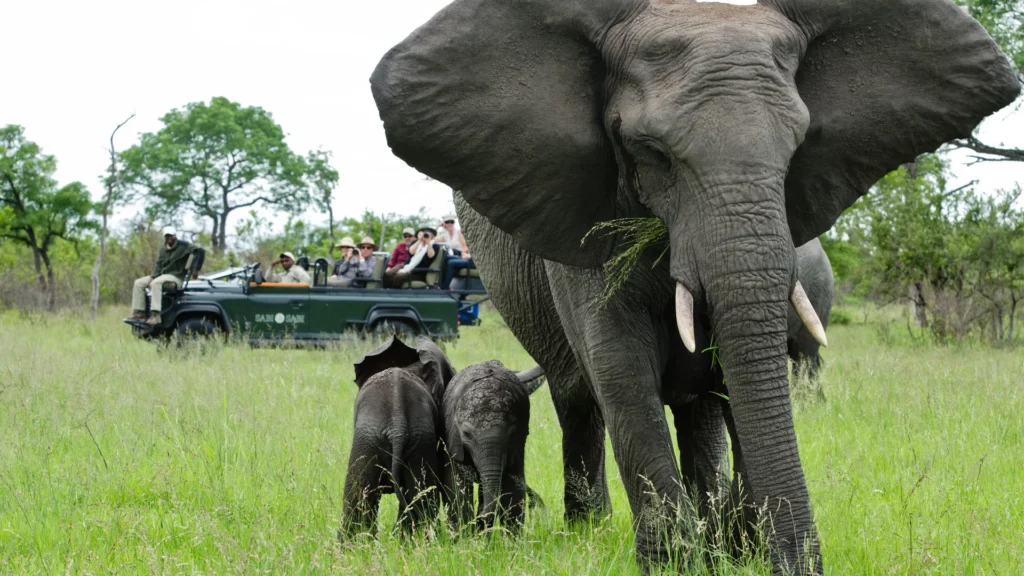
Considerably closer than you might expect. In a private reserve like Sabi Sands Game Reserve or Madikwe Game Reserve, habituated animals are accustomed to game drive vehicles and treat them as non-threatening objects in their environment. Leopard encounters at 3–5 metres are common. Lions may walk directly past your vehicle or sleep metres away. Elephants approach vehicles to investigate. The key insight: animals respond to the vehicle as a unit, not to the people within it — as long as you remain seated, still, and quiet, you are effectively invisible.
What Should You Pack for Your First African Safari?
Packing correctly for your first African safari will help you stay comfortable during game drives, bush walks and transfers between camps. Neutral-coloured clothing (khaki, olive, tan, beige) — the bush is dusty and animals are alert to bright colours. Layers are essential: mornings can be cold (0–15°C at dawn even in summer), afternoons warm (25–35°C). A sun hat, polarised sunglasses, SPF 50+ sunscreen, and DEET insect repellent (50%+ for malaria areas) are non-negotiables. Soft-sided luggage is required for bush plane transfers (strict 15kg weight limit). Binoculars (8×42 or 10×42 is the standard recommendation) transform your birding and distant sighting experience significantly.
Do You Need to Know Anything About Wildlife Beforehand?
No — your ranger is the expert and their knowledge is extraordinary. You do not need to identify tracks, know Latin names for trees, or recognise bird calls in advance. However, reading a basic introduction to the Big Five and Africa’s most common species before departure enhances your experience. The more you understand about animal behaviour — why a lion yawns in submission, what it means when an elephant flaps its ears and mock-charges, why a leopard carries prey up a tree — the more you will get from every encounter.
First Safari: Which Destination?
For a first safari, South Africa offers the best combination of accessibility, Big Five reliability, excellent infrastructure, English-speaking guides, and value for money. Sabi Sands or Madikwe for luxury; Kruger self-drive for budget independence. For East Africa first-timers, the Masai Mara in July–October (for the migration) or the Serengeti calving season (January–February) deliver a world-class first experience. Tanzania’s Northern Circuit (Serengeti + Ngorongoro + Tarangire in 10–12 nights) is among the most complete first-safari itineraries on the continent.
Enquire Now — designing first safari itineraries is one of our specialities. We know exactly which lodges, destinations, and timing make first-time safaris genuinely extraordinary.