
Safari Packing List: Essential Items for First-Time Safari Travellers
A safari packing list should focus on practicality rather than quantity. Safari packing is often counterintuitive if your frame of reference is either adventure travel (overpack for every contingency) or beach holidays (pack light, buy what you need). The correct approach is closer to the beach holiday model: less than you think, better quality than you might bring for a European city trip, and specifically calibrated for the particular physical conditions of being on an open game drive vehicle at 5:30 in the morning in a southern African winter.
This list covers everything you need and flags the specific items that first-time visitors most often get wrong.
Safari Packing List: Clothing Essentials
Colour
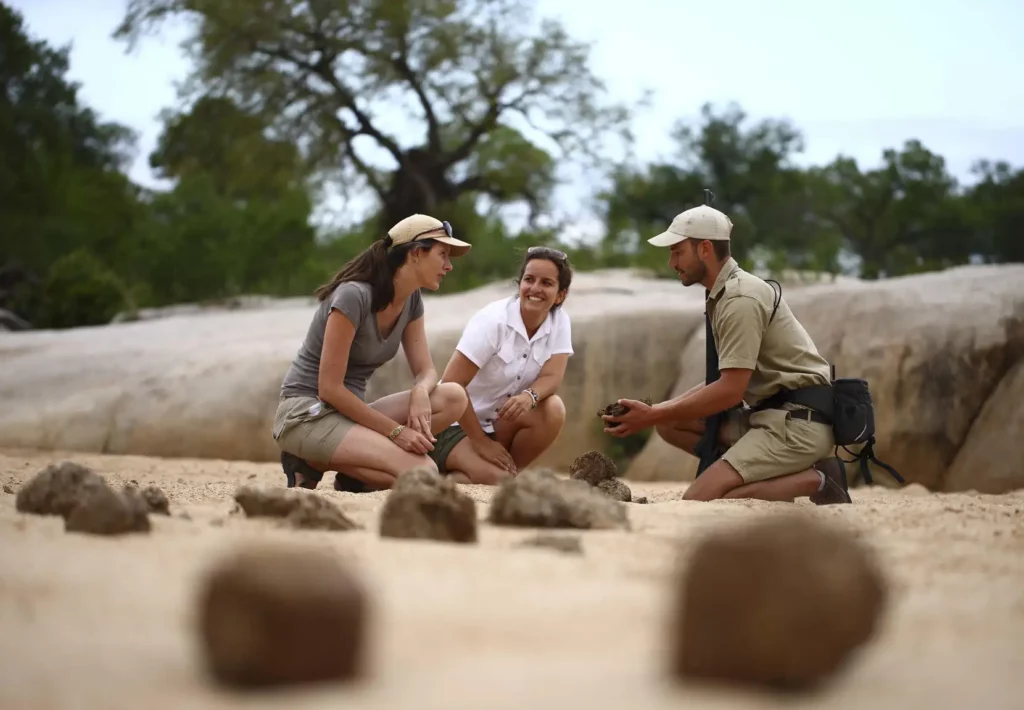
Neutral colours: khaki, olive, tan, grey, beige, and brown. Avoid white, which reflects light, shows dust easily, and can make you more visible at distance. Avoid black, which absorbs heat and can become uncomfortable during warm-weather game drives. Avoid camouflage clothing, as it is restricted to military use in some African countries and may create complications at borders or police checkpoints.
The practical reason for neutrals beyond convention: dust. Every game drive produces dust. Khaki hides it; white demonstrates it.
Layering
The temperature range during a single game drive in a South African dry season can span 25°C: pre-dawn temperatures of 3–8°C on an open vehicle become 28–32°C by mid-morning. You need to be able to peel layers efficiently.
The layering system: thermal base layer (lightweight merino or polypropylene) → fleece mid-layer → wind-resistant outer layer for the drive vehicle. In summer (November–March), the base layer may be unnecessary, but the fleece is always worth having for early morning drives.
Specific Clothing Items
- Fleece or down jacket: Not optional for dry season (May–September). A down packable jacket is the most versatile option — compresses to nothing, is warm enough for 3°C on a moving vehicle.
- Long-sleeved shirts (2–3): Sun protection on game drives; quick-dry fabric preferred.
- T-shirts (2–3): For lodge time and walks.
- Neutral trousers or cargo pants (2): With pockets for field guides, sunscreen, binoculars. One convertible pair (zip-off to shorts) is practical.
- Shorts (1–2): For midday pool time and lodge activities in warm weather.
- Comfortable walking shoes or boots: For walking safaris and lodge paths. Ankle support is useful if walking safaris are planned.
- Sandals or light shoes: For evenings at the lodge.
- Hat: Wide-brimmed for sun protection on game drives. A proper brimmed hat rather than a baseball cap — the open vehicle provides no overhead shade.
- Lightweight scarf or neck gaiter: Invaluable for dust on game drives and double as extra warmth in the morning.
- Swimwear: Most lodges have pools; the afternoon rest period between drives is pool time.
- Light rain jacket: Wet season (November–April) essential; dry season useful as a wind layer on cold morning drives.
Safari Packing List: Essential Equipment
Binoculars
The most impactful single piece of safari equipment. An 8×42 configuration is the standard safari recommendation: wide field of view, adequate magnification for birding and distant game, bright enough for dawn and dusk low-light conditions. Bring binoculars even if you think you will not use them — you will use them on every drive.
Camera
Wildlife photography is beyond this guide’s scope, but the practical note: a smartphone camera with a good optical zoom (or an external zoom lens for smartphones) is adequate for safari photography for most travellers. Serious wildlife photography requires a DSLR or mirrorless camera with a 400mm+ telephoto lens; this is expensive, heavy, and only worth bringing if photography is a primary objective of the trip.
Bring a dust bag or dry bag for any camera equipment. Game drive dust is comprehensive and damaging to optical equipment.
Torch/Headlamp
Many tented safari camps have limited pathway lighting by design, preserving the wilderness atmosphere and reducing disturbance to wildlife. A headlamp is often more practical than a handheld torch for moving around camp after dark.
Power Bank
Game drives are three to four hours long, and frequent photography can quickly drain a smartphone battery. A 10,000mAh power bank is usually sufficient to keep a smartphone charged throughout a full day on safari.
Safari Packing List: Health and Medical Essentials
- Anti-malarials: Prescribed by your travel medicine specialist if travelling to malaria-risk areas in the South African Lowveld, including Sabi Sands and Kruger National Park, as well as Botswana’s Okavango Delta or safari destinations in East Africa. Begin course before departure as directed. Anti-malarials are generally not required for destinations such as the Eastern Cape or Pilanesberg.
- High-factor sunscreen (SPF50+): Open vehicle game drives in direct sun for three to four hours. Apply before departure and carry for reapplication during the drive.
- Insect repellent (DEET-based): For evening use at lodge. Malaria areas warrant serious repellent; Eastern Cape requires less but mosquitoes are present in summer.
- Personal medication: With enough surplus for itinerary extensions. Safari logistics mean that a missed connection can extend a stay unexpectedly.
- Travel vaccinations: Yellow fever vaccination required for entry into some African countries if arriving via an endemic country. Consult your travel medicine clinic at least 6 weeks before departure for the full vaccination schedule (hepatitis A, typhoid, tetanus update are typically recommended).
- Basic first aid kit: Blister plasters (for walking safaris), antihistamine, diarrhoea treatment, oral rehydration sachets. Lodges carry comprehensive first aid supplies; this is supplementary for the drives.
Luggage
Most light aircraft routes into remote safari destinations impose a 15kg soft bag restriction per person. Hard-sided suitcases often cannot be loaded into light aircraft luggage bays. A soft duffel bag (not a hard case) is the required format for fly-in itineraries involving light aircraft. Check your specific lodge’s luggage policy; this is a firm restriction, not a guideline.
For road-only itineraries (Eastern Cape self-drive, Pilanesberg), standard luggage applies without restriction.
Plan Your Safari with ASG
African Safari Group provides pre-departure packing guidance and practical preparation advice as part of every booking. Tell us your destination and we will send you a region-specific preparation guide tailored to the specific conditions of your itinerary.