
Best Africa Safari Destinations: Expert Guide for Discerning Travellers
The best Africa safari destinations offer very different wildlife experiences, landscapes, and styles of travel. Choosing between South Africa, Botswana, Kenya, Tanzania, Zimbabwe, Zambia, Namibia, and Rwanda depends on your budget, travel goals, preferred wildlife, and the time of year you visit. This guide compares Africa’s leading safari destinations to help you choose the one that’s right for you.
Best Africa Safari Destinations in South Africa
Sabi Sands Game Reserve, Limpopo
The benchmark against which all private game reserves in Africa are measured. Sabi Sands has the world’s most reliably visible leopard population — a product of decades of vehicle habituation and expert guide networks that have mapped individual animals’ territories with precision. MalaMala, Londolozi, Singita, and Sabi Sabi represent the gold standard of African lodge hospitality. Rates are high (R20,000–R60,000+ pps/night at the top properties) but deliver an experience that justifies the investment for a once-in-a-decade safari. Malaria risk applies; prophylactics recommended.
Timbavati Game Reserve, Limpopo
Adjacent to Sabi Sands in the Greater Kruger ecosystem, Timbavati shares the same unfenced border with Kruger National Park and delivers comparable wildlife quality at a substantially lower price point. The reserve’s white lion population — first documented here in 1975, a genetic phenomenon unique to this region — is Timbavati’s most famous distinction. Lodges including Tanda Tula, Kings Camp, and Ngala (CC Africa) deliver top-tier game drives in one of South Africa’s most underrated reserves. Best value in the Greater Kruger ecosystem.
Eastern Cape Private Reserves
Amakhala, Shamwari, Kariega, and Kwandwe are South Africa’s finest malaria-free Big Five destinations. Within 60–90 minutes of Gqeberha (Port Elizabeth) airport, these reserves offer full Big Five game drives without prophylactics — the decisive advantage for families with young children, pregnant travellers, and anyone prioritising a clean health profile on holiday. Shamwari’s premium lodges (Eagles Crag, Long Lee Manor) are among South Africa’s best at any tier; Amakhala offers excellent value across eight distinct lodges from R5,040–R9,320 pps/night.
Pilanesberg National Park, North West
Three hours from Johannesburg, malaria-free, Big Five, and adjacent to Sun City resort: Pilanesberg is the most accessible major game reserve in South Africa for Johannesburg-based travellers and international visitors combining a city and safari itinerary. The reserve’s volcanic crater geology creates a distinctive landscape unlike any other park in the country. Day trips and weekend stays from Johannesburg are practical; longer stays at the reserve’s private lodges deliver a more complete experience.
Kruger National Park, Limpopo/Mpumalanga
Two million hectares of unfenced African wilderness. Kruger is not the most luxurious safari destination in South Africa — its public camps and self-drive culture are a different proposition from the private reserve experience — but it is one of the world’s genuinely irreplaceable wildlife areas. An estimated 17,000 elephants, 2,000 lions, 1,000 leopard, 37,000 buffalo. For self-drive safari enthusiasts, Kruger’s southern section (around Lower Sabie, Skukuza, and Satara) provides wildlife encounters of a quality and density that simply cannot be found anywhere else at its price point.
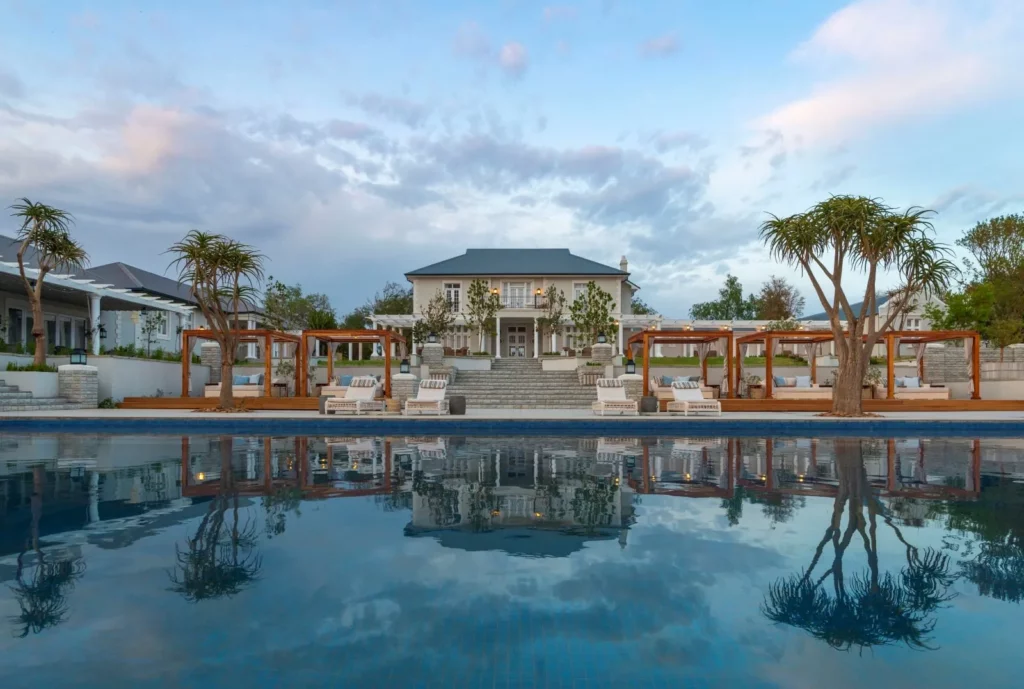
Best Africa Safari Destinations in Botswana
Okavango Delta
The world’s largest inland delta — a seasonal flood system that transforms 15,000 square kilometres of Kalahari desert into a water wilderness of extraordinary biological productivity. The Okavango is unlike any other safari destination: water-based game drives by mokoro (traditional dugout canoe), walking safaris on seasonally flooded islands, and a predator-prey dynamic influenced by the movement of the flood. Concession-based fly-camps carry fewer than sixteen guests. Botswana’s strict high-value, low-volume conservation policy keeps prices high and crowds absent. This is the benchmark of the fly-in safari experience.
Chobe National Park
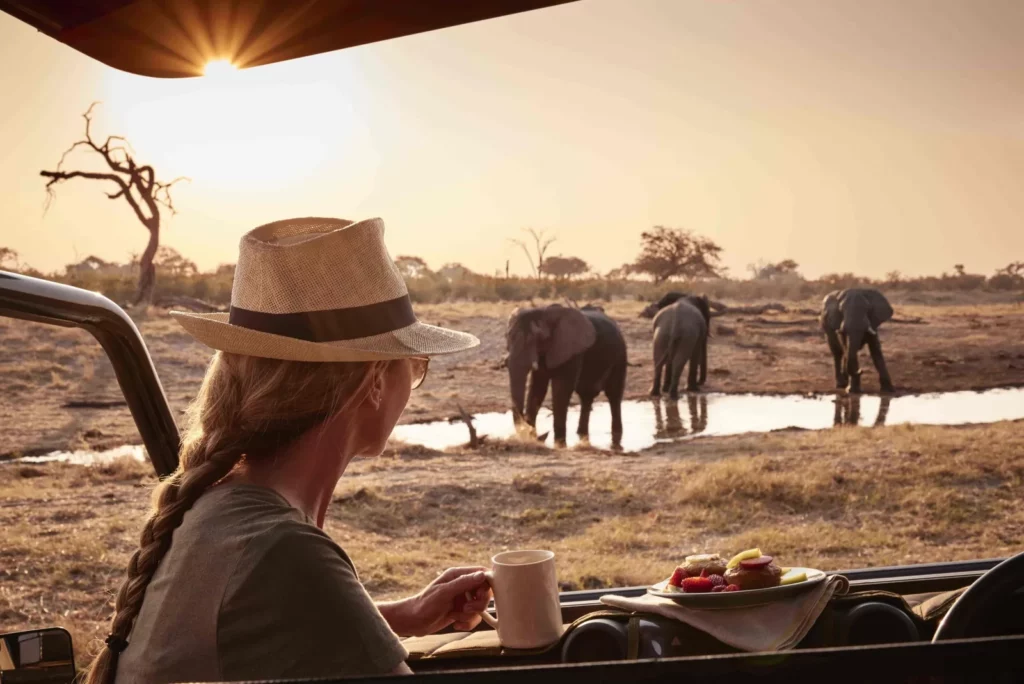
The world’s highest concentration of African elephants. During the dry season (May–October), elephant herds of hundreds congregate along the Chobe River — the closest thing to Africa’s original mega-fauna abundance that exists anywhere on the continent. Chobe River boat safaris are among safari travel’s most accessible and most dramatic experiences: hippo at close quarters, elephant swimming the river, crocodile on every bank, and fish eagle calling from every tall tree. Easily combined with Victoria Falls (30 minutes by road) and the Okavango Delta (by light aircraft).
Savuti, Chobe
The Savuti channel and the Savuti Marsh in western Chobe produce some of Africa’s most dramatic predator action — particularly lion hunting elephant, a behavioural pattern documented in few other places. Savuti is for the serious safari traveller who wants something beyond the iconic and well-trodden. Remote, access by light aircraft, limited camp capacity.
Best Africa Safari Destinations in Tanzania
Serengeti National Park
The Great Wildebeest Migration — 1.5 million animals moving across the Serengeti-Masai Mara ecosystem in the largest overland migration of mammals on earth — is Africa’s single most famous wildlife event. The river crossings at the Mara River (July–October) are the headline act: wildebeest plunging into crocodile-filled water by the thousands, the noise and dust and chaos of a scene unchanged since the Pleistocene. Outside migration timing, the Serengeti’s year-round resident wildlife (the Seronera Valley lion population is one of Africa’s finest) makes it a strong destination at any time. Plan 18–24 months ahead for July–October peak.
Ngorongoro Crater, Tanzania
The world’s largest intact volcanic caldera holds a self-contained ecosystem of 25,000 large mammals in 260 square kilometres. The crater’s geography — a bowl whose rim traps most wildlife inside — creates predator density and encounter rates that few other places in Africa can match. Black rhino are reliably seen (rare elsewhere). The crater floor’s open plain gives clear sightlines and close-quarters photography. Day trips from the crater rim lodges deliver extraordinary wildlife encounters in two to three hours.
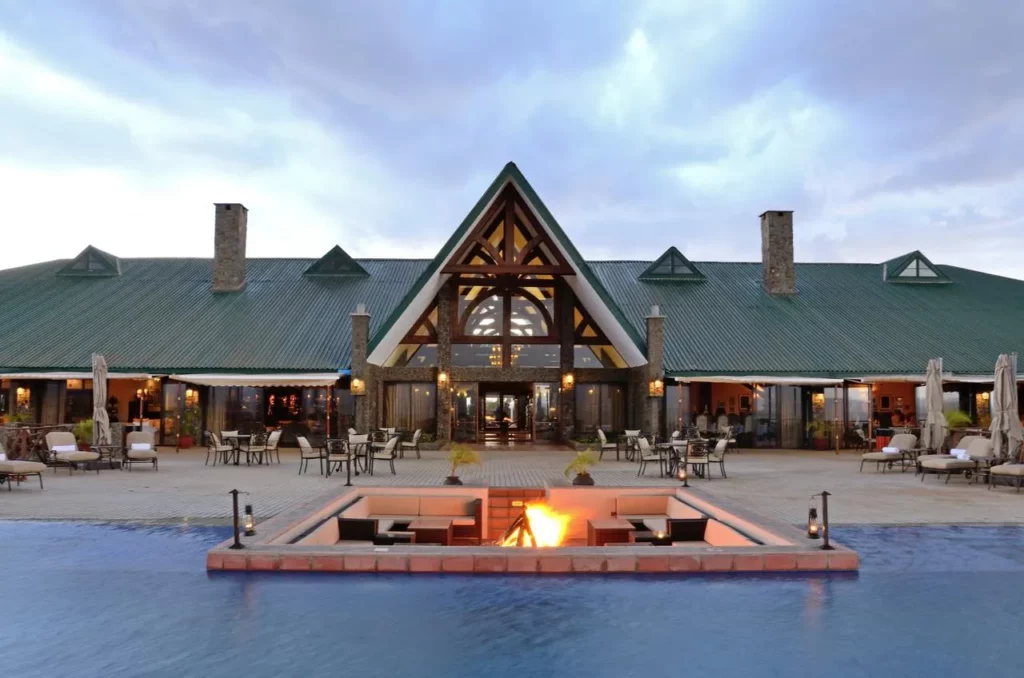
Best Africa Safari Destinations in Kenya
Masai Mara National Reserve
Kenya’s most famous reserve and the northern end of the Serengeti-Mara migration system. The Mara River crossings (July–October) on the Kenyan side are the complement to the Serengeti experience, often more dramatic in terms of the concentration of crossings at specific points. Year-round lion density in the Mara Triangle is exceptional; the reserve’s resident cheetah population is among Africa’s most studied and most viewed. The Mara’s private conservancies — Olare-Motorogi, Naboisho, Ol Kinyei — offer the Mara experience with dramatically fewer vehicles and higher-quality guide interaction.
Amboseli National Park
Amboseli is defined by one image: elephant herds moving across dry lake beds with Kilimanjaro — Africa’s highest mountain — rising behind them to 5,895 metres. The photography potential is unique in Africa; the elephant herds (among Africa’s most studied, with known individual genealogies extending back decades) are exceptionally habituated and approachable. The park is compact and can be covered thoroughly in two to three days.
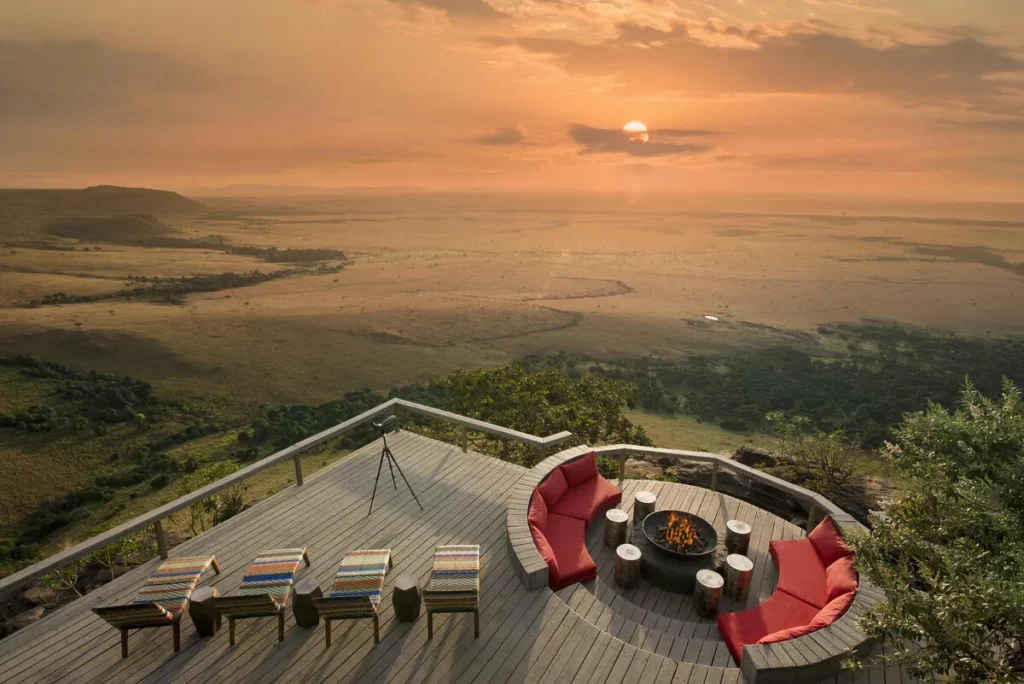
Best Africa Safari Destinations in Zimbabwe
Hwange National Park
Zimbabwe’s largest national park and one of Africa’s most underrated safari destinations. Hwange’s artificial watering points — maintained throughout the dry season — concentrate elephant herds of extraordinary size and produce predator-prey interactions of a quality comparable to Botswana’s finest concessions, at a fraction of the price. Wild dog are reliably seen at several Hwange lodges. The combination of Hwange (4–5 nights) with Victoria Falls (2 nights) is one of Africa’s strongest value itineraries.
Where to Start
For most travellers planning a first Africa safari, the right answer is either South Africa’s Eastern Cape (malaria-free, accessible, full Big Five, easy self-drive combination with Cape Town or the Garden Route) or South Africa’s Greater Kruger private reserves (Timbavati or Sabi Sands for the full Lowveld experience). Both are exceptional; the choice turns primarily on the malaria question and budget.
For repeat travellers who have done South Africa: Botswana’s Okavango Delta is the logical next step — a completely different landscape, water-based experience, and luxury level that resets what you think a safari can be.
East Africa — The Migration Destinations
Ngorongoro Crater, Tanzania
The world’s largest intact volcanic caldera holds 25,000 large mammals in 260 square kilometres — a self-contained ecosystem of extraordinary density. The crater floor’s open plain gives unobstructed sightlines across a landscape that changes constantly: lion pride at a kill at dawn, black rhino (among Africa’s most reliably viewed) moving through fever tree forest at midday, vast flamingo flocks turning the soda lake pink at dusk. Day trips from crater rim lodges can produce more high-quality Big Five encounters per hour than almost anywhere else in Africa. Ngorongoro Highlands lodges (The Manor, Gibbs Farm) offer the most atmospheric overnight base.
Samburu National Reserve, Kenya
Northern Kenya’s drylands reserve is the destination for species that exist nowhere else in the safari world: reticulated giraffe, Grevy’s zebra, Beisa oryx, Somali ostrich, and the gerenuk — an improbably long-necked antelope that feeds standing on its hind legs. For serious wildlife enthusiasts who have the East African mainstream destinations covered, Samburu offers a genuinely different biological world. Saruni Samburu and Sasaab are the benchmark lodges; both combine the wildlife programme with a cultural engagement with the Samburu people that most reserves cannot replicate.
Southern Africa Beyond South Africa and Botswana
Zambia — Walking Safari Origin
The walking safari was pioneered in Zambia’s South Luangwa National Park by Norman Carr in the 1950s. Zambia remains the continent’s finest walking safari destination: the Luangwa Valley’s leopard population is among Africa’s most studied, the valley’s concentrated wildlife includes large hippo and crocodile populations on the Luangwa River, and the walking safari tradition is taken seriously in a way it is not everywhere that offers walks as an optional add-on. Remote bush camps (Mfuwe Lodge, Robin Pope Safaris, Sanctuary Puku Ridge) deliver the walking safari experience at its most authentic. Fly in via Lusaka or Mfuwe airport.
Rwanda — Mountain Gorilla Trekking
A one-hour gorilla trek in Volcanoes National Park is not a wildlife sighting — it is an encounter of a categorically different kind. Spending an hour with a habituated mountain gorilla family in the Virunga mountains, watching a silverback navigate the group’s social dynamics while adolescents play and infants cling to their mothers, is the wildlife experience that most consistently produces an overwhelming emotional response in visitors who have done it. Permits (USD 1,500 per person in Rwanda) are strictly limited; book 12–18 months ahead for peak season. Combine with Uganda (Bwindi Impenetrable Forest offers a more remote equivalent) or with a Tanzania or Kenya safari circuit.
Namibia — Desert-Adapted Wildlife
Namibia’s Etosha National Park is one of Africa’s great national parks: a vast flat saltpan surrounded by woodland and bush where waterholes draw extraordinary concentrations of wildlife in the dry season (May–October). The black rhino population at Etosha is among the most accessible in Africa; lion, leopard, and cheetah are all reliably encountered. The country’s wider landscape — the Sossusvlei dunes, the Skeleton Coast, the Damaraland desert — supports desert-adapted elephant, desert lion, and black rhino in terrain unlike any other safari destination. A Namibia self-drive is one of Africa’s most compelling independent travel experiences.
How to Choose Between Destinations
The decision framework that African Safari Group’s specialists use with clients:
First Africa safari: South Africa’s Eastern Cape (malaria-free, accessible, full Big Five) or Greater Kruger private reserves (maximum wildlife density). The choice depends primarily on the malaria question and budget.
Second safari: Botswana’s Okavango Delta if the brief is a completely different type of safari experience (water-based, fly-in, high end). Zambia’s South Luangwa if walking safaris are the priority. Kenya’s Masai Mara if the Great Migration is the objective.
Third safari and beyond: Tanzania’s Serengeti for the migration; Rwanda for gorilla trekking; Namibia for a self-drive desert experience; Zimbabwe’s Hwange for exceptional value alongside Victoria Falls.
Combination trip: The multi-country southern Africa circuit — South Africa, Botswana, Zimbabwe (Victoria Falls), Zambia — is achievable in sixteen to twenty days and covers the region’s finest destinations in a single itinerary. East Africa’s equivalent (Kenya, Tanzania, Rwanda) can be built around Masai Mara timing for the migration in a twelve to fourteen day programme.
Find Your Africa Safari Destination
African Safari Group has specialist knowledge across southern and East Africa. Whether this is your first safari or your tenth, our team can match you to the right destination, the right lodges, and the right timing for the experience you want.