
African Wildlife Calendar: What to See and When
What Is the Best Time of Year to See Wildlife in Africa?
The best time to see wildlife in Africa depends on the destination, species and type of safari experience you’re looking for. The dry season (broadly May–October across Southern and East Africa) concentrates wildlife at waterholes and rivers, making animals easier to locate and producing the best game drive conditions. The wet season (November–April) brings lush green landscapes, spectacular birdlife, newborn animals, and lower prices — but denser vegetation can make some species harder to spot. There is no single universally best time; every month in Africa offers a different, rewarding wildlife experience.
January and February: Calving Season and East Africa Birdlife
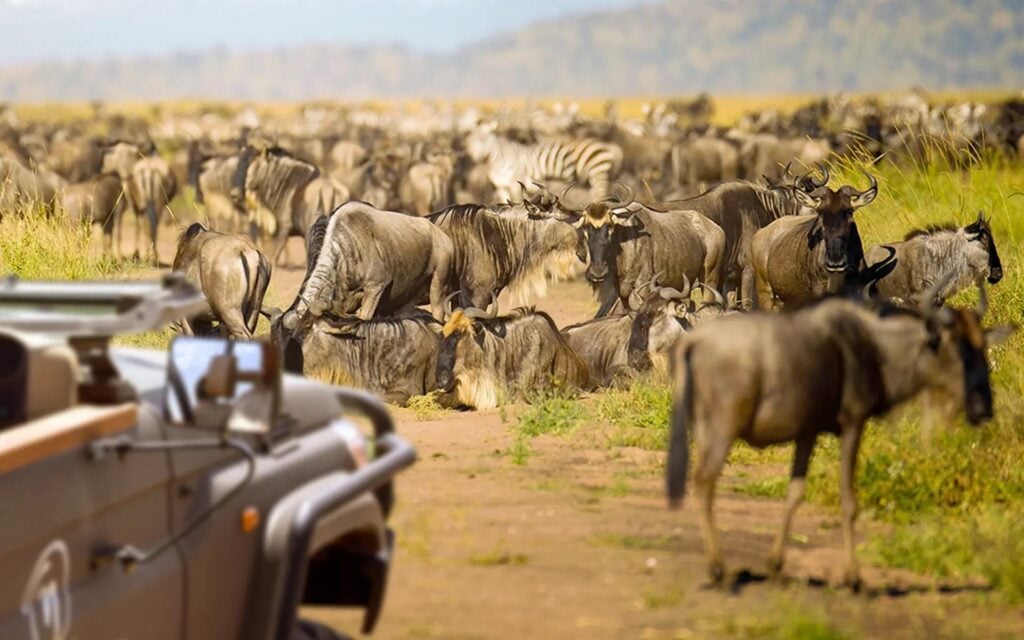
Tanzania’s southern Serengeti hosts the Great Migration calving season — approximately 500,000 wildebeest calves born in a three-week window. Predator activity peaks as lion, cheetah, and hyena follow the herds. East Africa’s green season is in full effect with lush landscapes and excellent birding. In Southern Africa, the wet season continues — bushveld is lush and green, impala lambs appear (January is nicknamed “Suicide Month” for impala as leopard and cheetah target lambs), and many species are breeding.
June to August: Southern Africa’s Dry Season Peak
The dry season in Southern Africa (Kruger, Sabi Sands, Okavango Delta, Chobe, Madikwe) is the prime game viewing season. Vegetation thins as grass dries, making animals easier to spot; wildlife concentrates at permanent water sources; and predator activity is high. Chobe National Park offers its peak elephant viewing in June–July as tens of thousands of elephants converge on the Chobe River. The Okavango Delta reaches its peak flood levels in June–July, making mokoro safaris spectacular. Nights can be cold (0–10°C at Kruger), so bring warm layers for game drives.
July to October: Great Migration Crossings (Kenya)
Kenya’s Masai Mara hosts the migration’s most dramatic phase — the Mara River crossings. August and September offer the highest crossing probability. Predator populations in the Mara are at their most active. Amboseli (Kenya) is excellent year-round but particularly good in the dry season (June–October) when elephant herds congregate around Kilimanjaro’s mountain streams.
November and December: Green Season Begins
The short rains arrive in East Africa (November–December), bringing dramatic skies and fresh green landscapes. Migration herds begin moving south through the Serengeti. Southern Africa’s summer begins — temperatures rise, afternoon thunderstorms appear, and the bush turns green. Baby animals begin appearing in South Africa’s private reserves. Bird migrants from the northern hemisphere arrive, making November–April the best birding season across the continent.
Species-Specific Viewing Guide
Leopard: Year-round in Sabi Sands; best in dry season when vegetation is low and cubs are present (June–September).
Wild dog: Denning season (May–July) is best — packs are stationary, pups emerge from dens. Botswana’s Okavango Delta and Zimbabwe’s Hwange are top destinations.
Cheetah: Year-round in Masai Mara (one of Africa’s highest densities), Serengeti, and Madikwe. Calving season (January–February) produces mother-and-cub hunting activity.
Rhino: Year-round at Madikwe, Pilanesberg, and Addo. Ngorongoro Crater hosts Africa’s densest black rhino population — visible year-round in the crater bowl.
Elephant: Year-round, but Chobe’s dry season (June–October) concentrates the continent’s largest herds at the river. Amboseli (Kenya) year-round with Kilimanjaro backdrop.
Enquire Now — tell us which species and experiences matter most and we will time your safari for maximum wildlife impact.